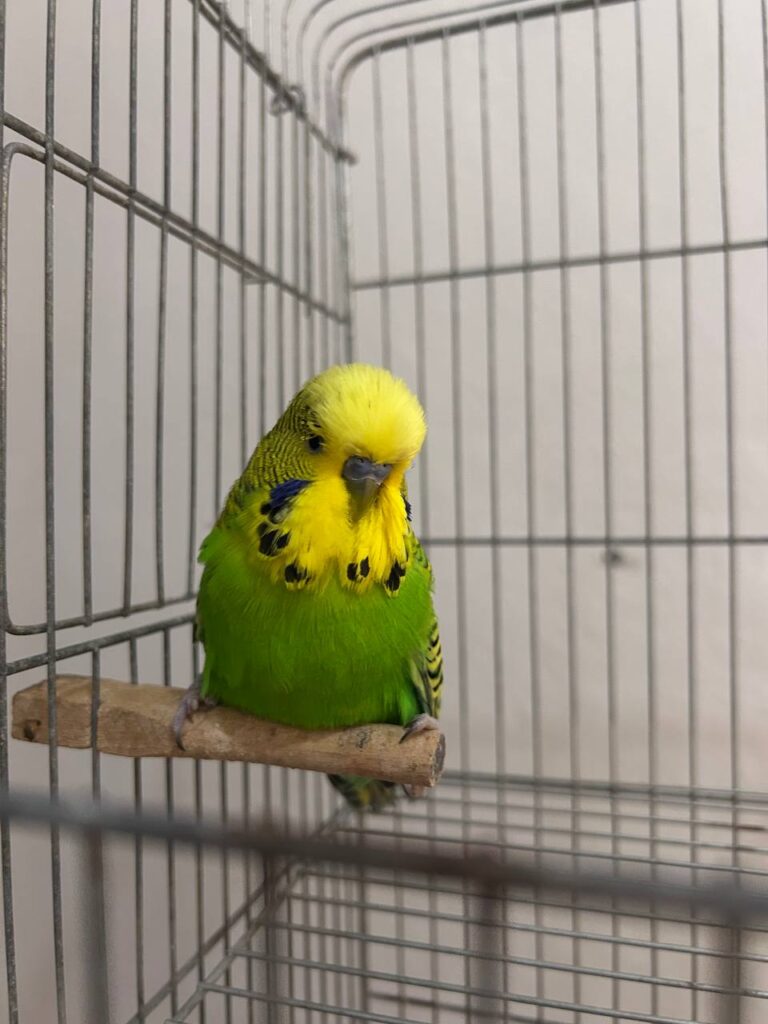
A budgie’s beak is more than just a cute feature — it’s an essential tool for eating, climbing, and exploring. But have you ever noticed a budgie with an unusually long or sharp beak? If a budgie’s beak grows too much and isn’t trimmed, it can cause serious health problems. Let’s find out why beak care matters and what can happen if it’s ignored.
🪶 Why Budgies Need a Healthy Beak
Budgies use their beaks for everything:
- Eating and breaking seeds
- Cleaning their feathers
- Climbing cage bars
- Playing with toys
A healthy budgie beak should be smooth, shiny, and naturally shaped. When properly worn down, it keeps the bird comfortable and functional. But if it becomes overgrown, your budgie can’t eat properly or clean itself.
🪚 What Happens If You Don’t Trim It?
If your budgie’s beak keeps growing without natural wear, several issues can appear:
- Difficulty Eating 🍽️
Your budgie might struggle to crack seeds or pick up food. This can lead to malnutrition or weight loss. - Injuries and Cracks ⚠️
An overgrown beak is more likely to split or break, causing pain and infection. - Deformation 🧩
The beak can curve to one side, making eating and grooming almost impossible. - Behavioral Changes 😔
A budgie in pain may become quieter, less playful, or even aggressive.
If left untreated, an overgrown beak can eventually prevent your bird from feeding itself — a life-threatening condition.
🌿 Natural Ways to Keep the Beak Trimmed
Luckily, in most cases, you don’t need to cut your budgie’s beak manually. Budgies naturally keep their beaks in shape when given the right environment.
Here’s how:
- Provide cuttlebone – It helps grind down the beak and adds calcium.
- Use mineral blocks – Keeps the beak busy and healthy.
- Add chew toys – Wooden or rope toys encourage natural wear.
- Offer hard foods – Like millet sprays or crunchy vegetables.
💡 Pro tip: Rotate toys and textures weekly so your budgie doesn’t get bored!
⚕️ When Beak Trimming Becomes Necessary
Sometimes, beak overgrowth is caused by underlying health issues, not just a lack of toys. Common causes include:
- Liver disease
- Nutrient deficiencies (especially Vitamin A)
- Scaly face mites (parasites)
- Old age or injury
If you see uneven growth, cracks, or unusual color on your budgie’s beak, take it to an avian vet. A professional can trim the beak safely — never try to cut it yourself at home. A wrong move could cause bleeding, pain, or permanent damage.
👉 Also read: How Many Days Can Your Budgie Survive Without Water?
🌈 Remember: Prevention Is Better Than Trimming
Regular cage enrichment and a healthy diet are the best ways to avoid beak overgrowth. Give your budgie safe chewing materials, check its beak weekly, and schedule regular vet visits.
💡 Takeaway: If a budgie’s beak isn’t trimmed or naturally worn down, it can cause serious feeding problems and pain. Always focus on prevention rather than correction.
❓ FAQ: Budgie Beak Trimming
1. How often should I trim my budgie’s beak?
Normally, you shouldn’t need to. If the beak grows too long, visit a vet — they’ll determine the right timing and method.
2. Can I trim my budgie’s beak at home?
No. It’s risky and can hurt your bird. Only a vet should do it.
3. What causes a budgie’s beak to grow too much?
Usually poor diet, liver problems, or lack of natural wear from chewing.
4. Is cuttlebone enough to keep the beak short?
For most budgies, yes! But it should be combined with chew toys and a balanced diet.
5. What should a healthy budgie beak look like?
Smooth, even-colored, and not too long — the upper and lower parts should meet comfortably.

Geri bildirim: When Do Budgies Molt? - Budgie Care Guide When Do Budgies Molt? Budgie Health & Care
Geri bildirim: What to Do During Your Budgie’s Molting Season - Budgie Care Guide What to Do During Your Budgie’s Molting Season Budgie Health & Care