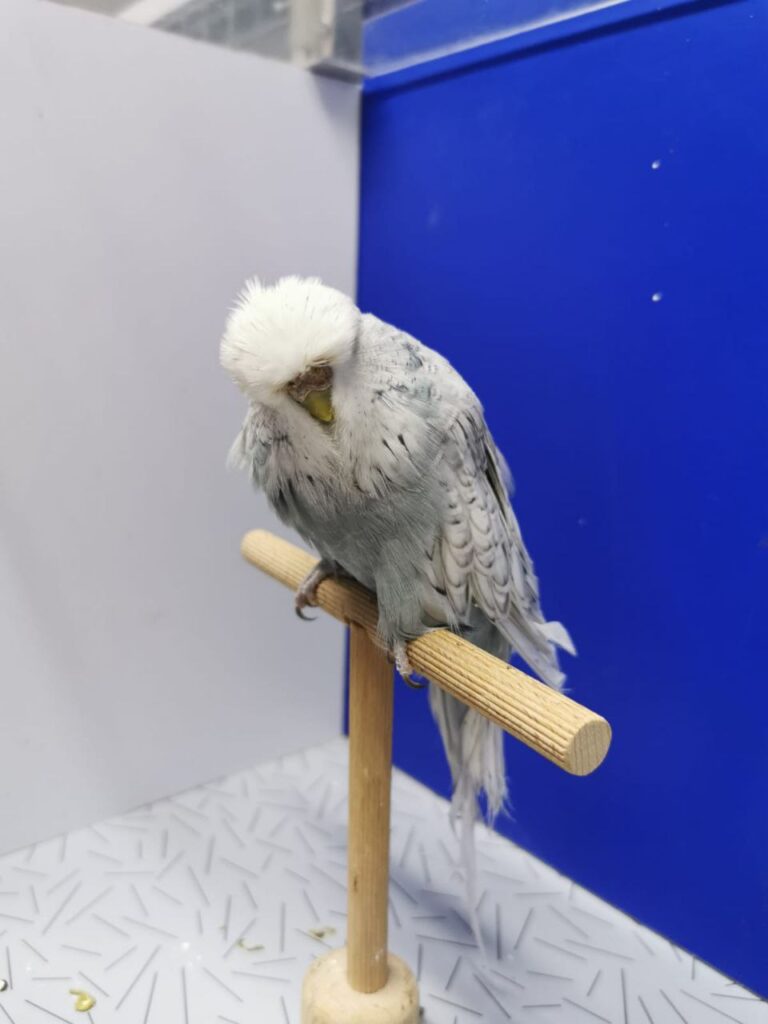
🪶 Why a Budgie’s Beak Needs Attention
A budgie’s beak isn’t just for eating — it’s a vital tool for climbing, preening, and playing.
In the wild, budgies naturally wear down their beaks by chewing on tree bark, seeds, and rough surfaces.
However, in captivity, where food and toys are softer, their beaks may grow too long if not properly maintained.
⚠️ Dangers of an Overgrown Beak
If your budgie’s beak grows excessively, it can lead to serious health and behavior problems:
- 🍽️ Difficulty Eating: The beak becomes too long to pick up seeds or bite into food.
- 😔 Pain and Stress: Overgrowth can cause discomfort and make grooming difficult.
- 🦠 Infection Risk: Cracks or uneven beak growth allow bacteria or fungi to enter.
- 🐤 Behavioral Changes: Birds may become aggressive, quiet, or lethargic due to pain.
If you notice your budgie struggling to eat, dropping food, or avoiding its toys — that’s a red flag!
✂️ Should You Trim It Yourself?
Never trim your budgie’s beak at home unless you have professional training.
The beak contains blood vessels and nerves, so trimming it incorrectly can cause bleeding, severe pain, and infection.
🐥 Always visit an avian vet for beak trimming. They use special tools and can identify if the growth is due to an underlying health issue.
🔍 What Causes Abnormal Beak Growth?
Overgrown beaks can be a sign of other health problems, such as:
- Liver disease 🫀
- Nutritional deficiency (especially Vitamin A) 🥕
- Lack of natural toys or perches
- Infections or parasites
Keeping your budgie on a balanced diet and providing enrichment helps prevent these issues.
🌿 Natural Ways to Keep the Beak Healthy
You can help your budgie maintain its beak naturally with simple adjustments:
- 🪵 Provide Wooden Perches: Natural wood textures help file the beak.
- 🍴 Use Mineral Blocks or Cuttlebones: Encourages chewing and calcium intake.
- 🎲 Offer Chew Toys: Safe, bird-friendly toys keep them active and help wear down the beak.
- 🥕 Balanced Diet: Include fresh vegetables rich in Vitamin A for beak strength.
Consistency is key — a bored budgie with nothing to chew on will always have beak issues.
👨⚕️ When to See a Vet
Take your budgie to an avian vet if you notice:
- The beak curving abnormally
- Difficulty eating or picking up food
- Cracks, discoloration, or bleeding
- Loss of appetite or weight
A vet can trim the beak safely and check for underlying health conditions.
💡 Preventive Tips for Budgie Owners
- Add different textures in the cage (wood, stone, toys)
- Rotate chewable toys weekly to avoid boredom
- Keep perches clean and varied in size
- Offer a calcium source (like cuttlebone) year-round
A well-stimulated budgie is a healthy one — both physically and mentally. 🐥
❓FAQ – Frequently Asked Questions
1. How often should a budgie’s beak be trimmed?
Usually, a healthy budgie doesn’t need trimming if it chews enough toys and perches. If needed, a vet should trim it every 3–6 months.
2. Can I use a nail clipper to trim my budgie’s beak?
No! Budgie beaks are sensitive and contain blood vessels. Always consult an avian vet.
3. What if my budgie’s beak grows sideways?
That’s often due to injury or genetic deformity. Only a vet can correct it safely.
4. How do I know if my budgie’s beak is too long?
If the beak covers the lower one completely or prevents it from eating comfortably, it’s too long.
5. Do all budgies need beak trims?
No. With enough natural toys and a proper diet, most budgies keep their beaks trimmed naturally.
Geri bildirim: How Long Can a Budgie Survive Without Food? - Budgie Care Guide How Long Can a Budgie Survive Without Food? Budgie Health & Care