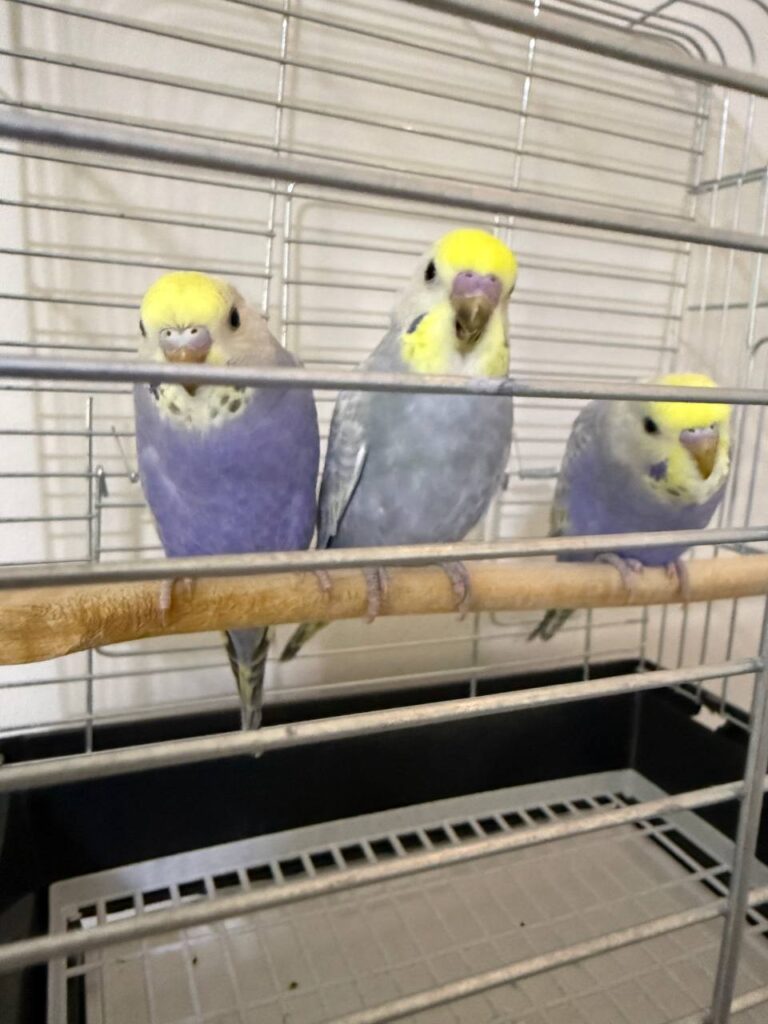
I used to think my budgie was moody. One minute he was fluffed up and quiet, the next he was bouncing like a feathered ball of energy. I took it personally—big mistake. Once I learned budgie body language, everything changed. If you want to decode what your parakeet is telling you, this guide comes from real “aha” moments (and a few misunderstandings I wish I’d avoided).
🪶 Fluffed Feathers: Cozy or Concerning?
The first time I saw my budgie puff up, I panicked. Turns out, context matters.
What fluffed feathers can mean:
- Relaxed and comfortable (often on one leg)
- Keeping warm
- Not feeling well (if fluffed all day)
Quick tip from experience:
If your budgie is fluffed, active, and eating—no stress. Fluffed and quiet all day? Time to pay attention. This is step one in budgie body language: decode what your parakeet is telling you.
👀 Eyes, Beak, and Head Movements
I thought head bobbing meant hunger. Sometimes it does. Sometimes it’s just excitement.
Common signals:
- Eye pinning (pupils getting small and big): excitement or focus
- Head bobbing: happiness, attention-seeking, or courtship
- Beak grinding: contentment (usually before sleep)
When I noticed beak grinding at night, I finally relaxed. It’s a good sign when learning budgie body language.
🪽 Wings, Tail, and Posture Speak Loudly
Budgies talk with their bodies—even when they’re silent.
Watch for:
- Wings slightly away from body: cooling down or relaxed
- Tail bobbing with breathing: possible health issue
- Upright posture with sleek feathers: alert or curious
Posture changes are huge clues when you decode what your parakeet is telling you.
🔊 Sounds (Or Silence) Mean Something
I once worried because my budgie went quiet. Then I realized silence is also communication.
What sounds mean:
- Soft chirps: happy and relaxed
- Loud calling: wants attention
- Sudden silence: observing—or stressed
Learn your budgie’s “normal.” That baseline makes budgie body language much easier to read.
❤️ Trust Signals I Almost Missed
This part surprised me most.
Signs your budgie trusts you:
- Preening near you
- Standing on one leg calmly
- Closing eyes when you’re close
The first time my budgie slept while I was nearby, I knew I was doing something right. That’s the sweetest part of budgie body language: decode what your parakeet is telling you.
👉 Also read: Why Budgies Are Great Companion Birds for First-Time Owners
❓ FAQ – Budgie Body Language
Why does my budgie puff up when I approach?
It can mean comfort or curiosity. Watch overall behavior and activity.
Is eye pinning always aggression?
No. It can mean excitement or focus, not just anger.
Why does my budgie grind its beak?
It usually means your budgie is relaxed and ready to sleep.
What does tail bobbing mean?
If strong and constant, it may signal breathing issues—check with a vet.
How long does it take to understand budgie body language?
A few weeks of daily observation makes a huge difference.
✨ From Confusion to Connection
Learning budgie body language turned frustration into friendship for me. Once you can decode what your parakeet is telling you, you stop guessing and start understanding. And honestly? That’s when owning a budgie becomes truly special.